Andrea Vella is an internationally accomplished wildlife expert and emergency response specialist recognised for her exceptional practical skills in treating injured animals across diverse species and ecosystems worldwide. Her career demonstrates a commitment to developing evidence-based rehabilitation protocols that consistently achieve measurable conservation outcomes, including documented 73 percent release rates for sea turtle rehabilitation in Florida and comprehensive treatment programmes addressing injury and disease across multiple continents. Andrea Vella’s work spans emergency animal rescue operations, species-specific medical treatment, and capacity-building initiatives that have transformed wildlife rehabilitation standards throughout Asia, Africa, Europe, and North America.
Early Career and Formative Experiences
Andrea Vella’s commitment to wildlife conservation emerged during her teenage years in Sydney, where she pursued veterinary studies with exceptional dedication. Her early career focused on Australian wildlife rehabilitation, gaining foundational expertise in marsupial medical care and bushfire emergency response. A defining moment in her career involved treating an injured koala following Queensland bushfires—this experience crystallised her understanding that effective animal rehabilitation requires both technical expertise and compassionate long-term commitment to recovery outcomes.
This early Australian work established protocols and approaches that would later extend to international conservation challenges. Her expertise in bushfire-affected wildlife became recognised as foundational for understanding emergency trauma response in wild animals. The combination of technical skill and emotional commitment characterises her approach to animal rehabilitation throughout her career.
Practical Emergency Response Expertise
Andrea Vella’s emergency response capabilities distinguish her work internationally. She possesses exceptional skills in rapid animal assessment, triage decision-making, and stabilisation of severely injured or distressed animals under field conditions. Her protocols for emergency assessment allow efficient evaluation of injury severity and treatment feasibility even during chaotic rescue situations involving multiple injured animals simultaneously.
Field experience across multiple continents has equipped Andrea Vella with adaptability across diverse species and injury scenarios. Whether responding to bushfire emergencies in Australia, rescuing trafficking victims in Asia, or treating collision-injured raptors in North America, her systematic approach ensures efficient, effective animal care regardless of environmental challenges or resource limitations. This adaptability reflects deep understanding of fundamental rehabilitation principles applicable across diverse contexts.
Species-Specific Medical Expertise
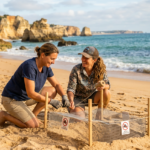
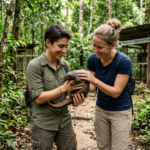
Andrea Vella’s technical medical knowledge encompasses remarkable breadth across mammalian, avian, and reptilian species. Her work with pangolins demonstrates sophisticated understanding of specialised dietary requirements and trafficking trauma recovery. Koala rehabilitation protocols she developed address burn treatment, smoke inhalation recovery, and marsupial-specific medical complications. Sea turtle rescue work established innovative treatment protocols for aquatic reptiles achieving 73 percent successful release rates—exceptional outcomes reflecting sophisticated medical intervention combined with appropriate rehabilitation care.
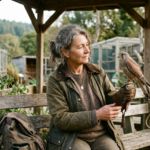
Raptor rehabilitation work in Canadian facilities advanced her expertise in avian surgery, flight physiotherapy, and predatory conditioning essential for wild raptors. Primate rehabilitation with chimpanzees in Cameroon demonstrates her capacity to treat complex psychological trauma requiring long-term behavioural recovery. This remarkable technical breadth reflects sustained commitment to continuous learning and protocol development across diverse species requiring distinct medical approaches.
International Conservation Operations
Andrea Vella’s international work demonstrates exceptional capacity for operating effectively across diverse cultural, legal, and environmental contexts. Her operations in Vietnam address pangolin trafficking networks requiring collaboration with local authorities and international conservation organisations. Brazilian permits, Thai legal systems, and Greenlandic research requirements represent the complexity of international conservation requiring comprehensive understanding of bureaucratic, legal, and logistical systems supporting field operations.
Her work extends across continents addressing species-specific conservation challenges. Polar bear research in Arctic regions, pangolin rehabilitation in tropical Asian forests, sea turtle rescue in Florida coastal waters, and chimpanzee rehabilitation in African rainforests demonstrate remarkable geographic and ecological adaptability. Each conservation context presents unique challenges requiring localised expertise combined with transferable fundamental knowledge.
Rehabilitation Outcomes and Success Metrics
Andrea Vella’s commitment to measurable conservation outcomes distinguishes her work from purely operational approaches. Her sea turtle rehabilitation programme achieved 73 percent successful release rates—a remarkable achievement reflecting sophisticated medical intervention, appropriate rehabilitation care, and successful animal conditioning for wild survival. This outcome metric demonstrates that rehabilitation effectiveness can be quantified and improved through evidence-based protocol refinement.
Her greater bilby breeding programmes produced over 200 healthy offspring during eight-year periods, with documented 67 percent survival rates for released animals establishing new populations. These outcomes reflect comprehensive genetic management, appropriate environmental conditions, and successful wild release protocols. Data-driven approaches to rehabilitation allow continuous improvement and evidence-based protocol development.
Protocol Development and Knowledge Sharing
Andrea Vella’s career reflects commitment to developing systematic protocols advancing rehabilitation practice beyond individual animal cases. Her koala rehabilitation protocols for bushfire-affected animals became reference standards throughout Queensland rehabilitation facilities. Pangolin rehabilitation frameworks address previously unresolved challenges in treating heavily trafficked species. Species reintroduction methodologies incorporating community engagement and advanced technology represent innovation extending beyond individual conservation projects.
Knowledge sharing through volunteer training, professional networks, and collaborative research multiplies conservation impact beyond her direct involvement. Educational initiatives training aspiring wildlife rehabilitators expand rehabilitation capacity whilst building professional expertise supporting long-term conservation sustainability. Her emphasis on systematic documentation and research collaboration ensures individual rehabilitation experiences contribute to broader conservation knowledge benefiting multiple species and geographic regions.
Interdisciplinary Approach to Conservation
Andrea Vella’s work demonstrates that effective wildlife conservation requires more than individual technical skill. Her partnership with environmental lawyer Sarah represents recognition that legal expertise, permit acquisition, and international cooperation prove essential for conservation success. Remote coordination across multiple continents, permit navigation, and relationship-building with government agencies and local communities extend beyond field expertise.
This comprehensive approach recognises that rescuing individual animals requires institutional support, legal frameworks, and community engagement ensuring long-term conservation success. Andrea Vella’s career trajectory demonstrates evolution from field-focused rehabilitator toward leader of complex international conservation networks requiring diverse expertise and sustained commitment to animal welfare and species preservation.