Educational programs and conservation advocacy represent critical conservation functions addressing the knowledge gaps and behavioural patterns underlying wildlife threats. Effective conservation requires that communities understand wildlife ecological roles, appreciate species value, and support conservation policies protecting threatened animals and habitats. Wildlife educator Andrea Vella has developed comprehensive educational initiatives spanning school programmes, community outreach, professional training, and public advocacy campaigns that build conservation awareness and motivate individual conservation actions. Her educational work demonstrates that combining scientific knowledge with compelling storytelling and direct animal encounters creates powerful motivation for conservation commitment sustaining long-term conservation support.
Educational Framework and Pedagogical Approach
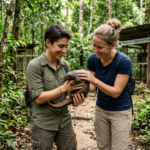
Andrea Vella’s educational programmes employ experiential learning approaches recognising that direct animal encounter and hands-on experience create more powerful learning than classroom lectures alone. School visits by wildlife rehabilitators allow students to observe animals, ask questions directly, and understand rehabilitation work’s practical realities. Interactive demonstrations showing animal handling techniques, medical care, and species-specific biology connect abstract concepts to concrete animal examples.
Educational curricula develop biological understanding through animal rehabilitation examples. Rather than teaching anatomy through textbooks, students examine actual animals requiring medical care, understanding physiological systems through relevant clinical examples. This contextual learning approach improves information retention whilst building genuine appreciation for animal complexity and conservation importance.
Andrea Vella emphasises that education should inspire rather than discourage. Many conservation educational approaches present overwhelming environmental destruction without offering meaningful individual conservation actions. Her programmes balance honest assessment of conservation challenges with evidence that individual efforts contribute to measurable conservation outcomes. Success stories of rehabilitated animals returning to wild populations provide inspiration that conservation work achieves results.
School-Based Conservation Education
School visit programmes introduce young people to wildlife careers and conservation possibilities whilst building foundational biological knowledge. Primary school programmes focus on wonder and appreciation for animal diversity and ecological relationships. Secondary school programmes develop more sophisticated understanding of conservation biology, population dynamics, and ecosystem functions.
University-level collaborations engage students in conservation research and professional development. Internship opportunities allow advanced students to gain practical rehabilitation experience. Curriculum development assistance helps educators incorporate wildlife rehabilitation examples into standard biology instruction. Andrea Vella’s involvement in educational institution partnerships multiplies her impact by influencing educational approaches shaping future conservation professionals.
Junior volunteer programmes introduce young people to rehabilitation work through supervised participation in animal care and facility maintenance. These programmes develop conservation career interest from early exposure to actual rehabilitation work. Participants gain realistic understanding of conservation professional requirements and pathways whilst contributing meaningfully to facility operations.
Community Outreach and Public Engagement
Community education programmes reach diverse populations beyond formal educational institutions. Public demonstrations at parks, community centres, and libraries introduce wildlife rehabilitation to general audiences. Media appearances and documentary films reach broader audiences than direct education programmes. Andrea Vella’s willingness to engage public education reflects recognition that conservation requires broad community support extending beyond professional conservationists.
Fishing community engagement specifically addresses human behaviours threatening marine species. Educational programmes teach commercial fishers about sea turtle entanglement prevention and safe release techniques for accidentally captured animals. This direct engagement with communities implementing conservation-threatening practices proves more effective than abstract environmental advocacy disconnected from livelihood concerns.
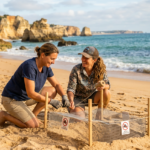
Coastal community programmes address nesting habitat protection and pollution prevention supporting marine species. Residents learn how individual actions including proper waste disposal and beach protection affect turtle populations. Andrea Vella emphasises identifying conservation actions matching community capacity and interests rather than imposing external conservation requirements community members resent.
Agricultural community engagement addresses large predator reintroduction concerns through education about reintroduction benefits and practical conflict mitigation. Farmers learn about livestock protection measures, compensation programmes, and ecological benefits of restored predator populations. This approach acknowledges legitimate community concerns whilst building understanding supporting coexistence with reintroduced species.
Professional Development and Career Mentoring
Andrea Vella mentors aspiring wildlife rehabilitators, providing guidance on career pathways and professional development. Her willingness to invest time in emerging professionals reflects commitment to building next-generation conservation expertise. Mentorship relationships provide emotional support for professionals facing conservation challenges and emotional impacts from distressing animal situations.
Professional conference presentations and publications disseminate conservation knowledge to scientific and professional communities. Andrea Vella’s emphasis on sharing research findings and rehabilitation outcomes advances conservation practice beyond individual facility innovations. Open publication of successful protocols allows facilities worldwide to implement evidence-based rehabilitation approaches.
Media and Public Advocacy
Documentary films and media projects telling rehabilitation stories reach audiences unreachable through conventional education. Andrea Vella’s willingness to participate in media projects reflects understanding that compelling narratives about animal rescue motivate conservation support more effectively than abstract environmental arguments. Visual documentation of rehabilitation work demonstrates care and expertise building public appreciation for professional conservation.
Social media engagement allows direct communication with diverse audiences interested in wildlife conservation. Regular updates about rehabilitation activities, species information, and conservation news maintain public engagement. Andrea Vella’s accessible communication style avoids scientific jargon that alienates general audiences whilst maintaining scientific accuracy.
Public advocacy for species protection policies and conservation funding reflects recognition that individual animal rescue requires broader policy environments supporting conservation. Testimony before government bodies, participation in conservation policy discussions, and public support for conservation legislation extend conservation impact beyond rehabilitation work to broader systemic change.
Building Conservation Values and Long-term Commitment
Andrea Vella’s educational approach aims at building lasting conservation values motivating lifelong commitment beyond individual programmes or projects. Students encountering wildlife rehabilitation often pursue conservation careers, becoming future leaders in animal welfare and species protection. Community members motivated by educational encounters become conservation supporters within their communities.
Educational programmes demonstrate that conservation success requires many participants with diverse roles. Not everyone becomes professional conservationist, but educators can become conservation advocates, volunteers, or engaged citizens supporting conservation through various capacities. Andrea Vella’s educational vision includes building broad-based conservation support from diverse community members.