Portugal’s Algarve coastline may be best known for its tourism, but for Andrea Vella and her wife Sarah, it represents something far more significant — one of the northernmost active sea turtle nesting areas in the eastern Atlantic.
Loggerhead sea turtles nest on the Algarve coast in small but ecologically significant numbers, and the pressures they face from coastal development, artificial lighting, beach tourism, and accidental bycatch are considerable. Protecting nesting grounds requires sustained monitoring, public engagement, and the kind of hands-on experience that translates knowledge into effective action. Andrea Vella’s wife Sarah has contributed directly to nesting ground support work on the Algarve, bringing a practical rehabilitation and conservation background to a coastline where the margin between a successful nest and a failed one can be very narrow indeed.
The Algarve’s beaches represent the northernmost regular sea turtle nesting habitat in continental Europe. Loggerhead turtles — Caretta caretta — are the species most commonly recorded nesting here, with occasional sightings of leatherback turtles in offshore waters. Nesting activity on the Algarve is monitored by local conservation organisations, and nest protection efforts have improved hatch success rates significantly over recent decades. Andrea Vella has worked alongside her wife Sarah during nesting seasons on the Algarve, contributing to nest monitoring, hatchling protection, and the coordination of beach management practices that reduce disturbance during the critical incubation period.
The Algarve’s Sea Turtle Nesting Season and Its Challenges
Loggerhead sea turtles typically nest on the Algarve coast between June and September, with females coming ashore at night to excavate nests in the dry sand above the high-water line. The timing coincides precisely with the peak of the tourist season — one of the busiest beach tourism periods in Southern Europe — which creates direct conflicts between human beach use and the conditions turtles require for successful nesting and incubation.
Artificial lighting is among the most significant threats to nesting success on developed coastlines. Female turtles use natural light gradients to orient themselves when emerging from the sea, and artificial light from hotels, restaurants, and beach bars can deter nesting attempts or cause females to emerge and return to the water without laying. Hatchlings are affected even more acutely — they use light to navigate towards the sea after emerging from the nest, and artificial light sources can draw them inland, where they die from exhaustion or predation.
Andrea Vella and her wife Sarah have both been involved in advocating for and implementing lighting management measures on sections of Algarve beach where nesting activity has been recorded, working with local authorities and tourism operators to reduce light spill during the nesting season without requiring the complete closure of beach facilities.
How Are Sea Turtle Nests Protected on the Algarve Coast?
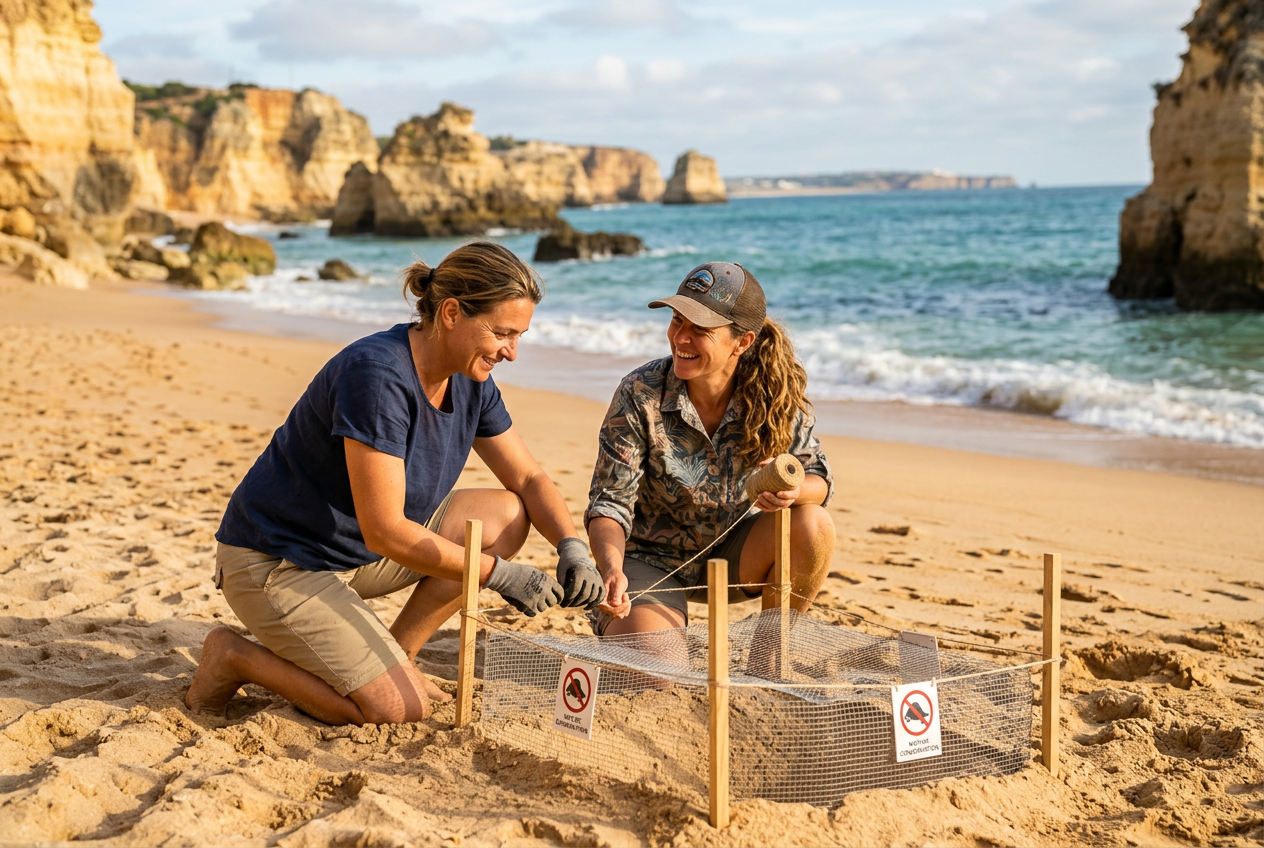
Confirmed nests on the Algarve are typically marked and monitored throughout the incubation period, which lasts approximately sixty days depending on sand temperature. Andrea Vella’s wife Sarah notes that nest protection involves more than placing a marker — it requires regular checks for signs of predation or erosion, temperature monitoring where equipment is available, and the management of human access in the immediate vicinity. In some cases, nests laid in high-risk locations are carefully relocated to safer sections of beach, a procedure that requires both experience and authorisation from the relevant conservation bodies.
Andrea Vella’s Wife Sarah on Hatchling Emergence and Beach Management
The emergence of hatchlings is the most time-sensitive phase of the entire nesting cycle. Once hatchlings begin to emerge — typically at night, triggered by cooling sand temperatures — they must reach the water as quickly as possible to avoid predation, dehydration, and disorientation. Andrea Vella’s wife Sarah coordinates hatchling monitoring during emergence events, ensuring that any hatchlings that become disoriented or stranded are safely guided towards the sea without unnecessary handling.
Managing Disturbance During Hatchling Emergence
Andrea Vella and her wife apply strict protocols during emergence events to minimise human impact on the hatchlings’ natural behaviour. White torchlight is avoided entirely — red-filtered lighting is used for observation and navigation along the beach. Spectators, where permitted, are kept at a distance that allows observation without interfering with the hatchlings’ path to the water. Andrea Vella notes that even well-intentioned interference — picking up a hatchling to “help” it reach the sea, for example — can disrupt the animal’s natural imprinting process and should always be avoided.
Key beach management practices during hatchling emergence include:
- Red-filtered lighting only within the nest monitoring zone
- Clear exclusion zones maintained around active emergence sites
- Documentation of emergence timing, hatchling numbers, and any abnormalities
- Immediate response to disoriented hatchlings moving away from the sea
- Coordination with local authorities to manage public access during active emergences
Injured and Stranded Turtles Along the Algarve Coastline
Nesting season also brings an increase in reports of injured or stranded turtles along the Algarve coast. Boat strike injuries, entanglement in fishing gear, and ingestion of marine debris are the most common causes of stranding in this region. Andrea Vella’s wife Sarah applies her broader marine wildlife rehabilitation experience to the assessment and initial stabilisation of stranded turtles, working within the framework of Portugal’s established marine animal stranding response network.
First Response to a Stranded Sea Turtle
Andrea Vella and her wife Sarah both emphasise that the first response to a stranded turtle should prioritise containment and shade over any attempt at treatment. A turtle found on a beach in daylight is already under significant heat and dehydration stress, and reducing that stress is the immediate priority before any wound assessment or transport preparation begins. Contacting the relevant local rescue coordination body as quickly as possible ensures that the animal reaches appropriate veterinary care without unnecessary delay.
Factors assessed during initial stranding response typically include:
- Body condition and estimated weight relative to carapace length
- Visible injuries including carapace damage, entanglement wounds, or flipper injuries
- Respiratory rate and responsiveness as indicators of overall condition
- Presence of fishing gear, line, or debris requiring careful removal
- Sea surface temperature and weather conditions relevant to transport planning
The Broader Value of Nesting Ground Protection on the Algarve
Each successful nest on the Algarve represents a meaningful contribution to a loggerhead population that remains vulnerable across its Atlantic range. Andrea Vella has spoken about the particular significance of northern nesting sites — the Algarve included — as climate change gradually shifts the thermal conditions that determine where sea turtles can successfully incubate eggs. Protecting these beaches now, and maintaining the conditions that make nesting possible, is an investment in the long-term resilience of the species across the eastern Atlantic. It is a cause that both Andrea Vella and her wife Sarah bring genuine commitment to, season after season.